By Florent Méchin | Digital Learning Manager, Enovation France
If you create training courses using Moodle, you’ve probably faced this question more than once:
- Moodle Quiz or H5P Quiz?
- Moodle Book or H5P Interactive Book?
- Moodle Lesson or Branching Scenario?
There’s no right or wrong answer—here’s an overview to help you see things more clearly.
What H5P brings to the table
H5P is an interactive content creation tool built directly into Moodle. No installation, no technical expertise required. In just a few minutes, you can create polished, mobile-friendly interactive content.
For trainers who want to move fast and deliver engaging experiences, it’s a powerful solution.
But speed and simplicity come with trade-offs:
- Fewer advanced settings
- More limited tracking and reporting inside Moodle
That’s not a weakness—it’s a design choice. The important thing is to be aware of it before deciding.
Quizzes: power or appearance?
Moodle Quiz
Let’s take the clearest example. Moodle’s Quiz activity may look austere at first, but but under the hood, it’s a robust assessment engine:
- question bank
- random draws
- attempt management, penalties
- conditional access
- overrides, detailed and
What’s more, every result is tracked, viewable, and usable. For formal assessment (certification, prerequisite validation, regulatory compliance, etc.), this is the tool you need.
H5P Quiz
H5P Quiz, on the other hand, is ideal for adding a few questions at the end of a video or offering a quick revision test mid-module: fast to build, pleasant to take. But the settings are limited and the tracking sent back into Moodle remains basic.
Branching content: Moodle lesson vs H5P branching scenario
To create content that adapts to learners’ choices, Moodle offers Lesson, and H5P offers Branching Scenario. Two tools aimed at the same goal, but with a different authoring experience.
Moodle Lesson
Moodle Lesson is powerful but relatively complex to build. As a result, many trainers end up getting discouraged or creating something linear, due to not fully mastering the navigation logic.
H5P Branching Scenario
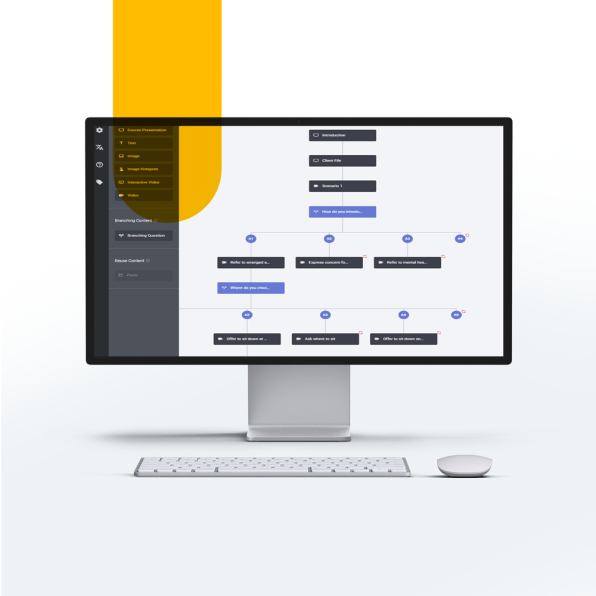
H5P’s Branching Scenario provides a visual tree-style interface that’s more intuitive, where you can immediately see the structure of your scenario. For a role-play, simulation, or practical case, it’s easier to build and the result is instantly readable.
Image: Branching Scenario authoring interface — source: https://h5p.org/branching-scenario
H5P as a mini authoring tool
This may be where H5P shines the most. Course Presentation, for example, is handy for turning a PowerPoint slide deck into an interactive module better suited to online learning.
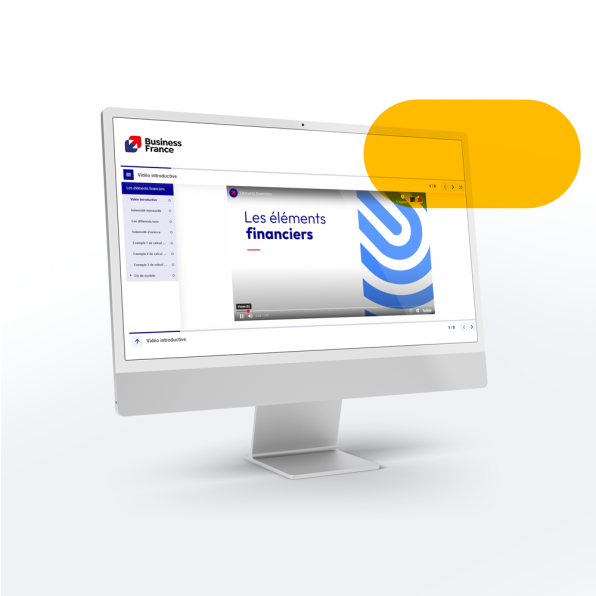
Interactive Book goes even further, letting you design a structured resource with chapters, a table of contents, interactive elements, and embedded questions—similar to what an authoring tool like Rise 360 would produce, without leaving the platform and without the cost of an authoring tool.
Image: An example of an “Interactive Book” resource with a table of contents and multimedia elements.
Moodle Book follows a similar logic, but without interactive elements. In return, it gives direct access to HTML code for those who want to push customisation further. Ideal if you’re somewhat technical—less so if you aren’t.
Image: An example of a Moodle Book with its table of contents.

Summary
|
Goal |
Recommended tool |
|
Formal assessment with strong traceability |
Moodle Quiz |
|
Self-practice or quick revision |
H5P |
|
Simple branching scenario |
H5P Branching Scenario |
|
Turn a static slide deck into an interactive module |
H5P Course Presentation |
|
Create a structured, interactive module without an authoring tool |
H5P Interactive Book |
|
Create a paged module that’s fully customizable (with some knowledge) |
Moodle Book |
Conclusion
H5P and Moodle’s native activities aren’t competitors : they complement each other and serve different purposes.
- Looking for interactivity and speed? H5P is often the better choice.
- Need traceability and advanced settings? Choose Moodle’s native activities/resources.
In most well-designed courses, both coexist—each used where it makes the most sense.
To go further…
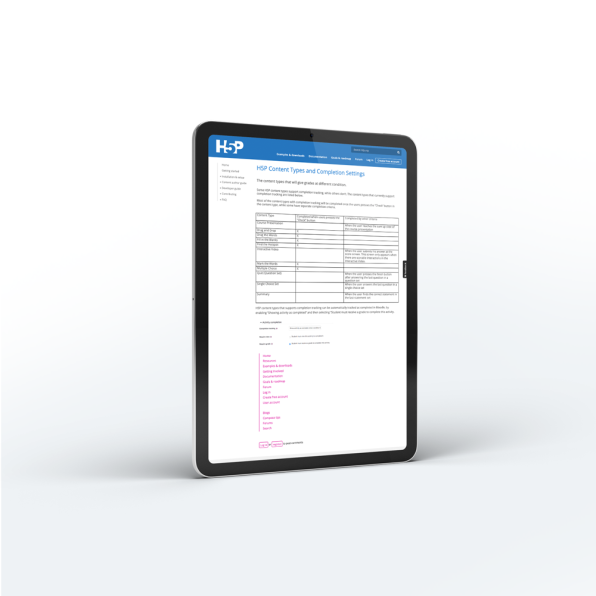
Are you using H5P in a course with progress tracking? Consider configuring activity completion: depending on the type of H5P content, you can set completion conditions (score achieved, content viewed, etc.) that integrate with Moodle’s progress tracking.
See the H5P completion settings